The Quiet Energy Shift: How Europe Is Transitioning to a New Electricity Model
Europe’s energy sector is changing structurally, not gradually. What this means in practice
Just 10–15 years ago, Europe’s energy system was built around large centralized generation: nuclear plants, coal-fired power stations, and gas facilities. The logic was simple — large assets produce electricity, and transmission networks distribute it.
Today, this model is no longer dominant. It is being gradually replaced by distributed energy generation, and this shift is confirmed not by forecasts, but by real-world data.
The scale of the transition: renewables are driving new growth
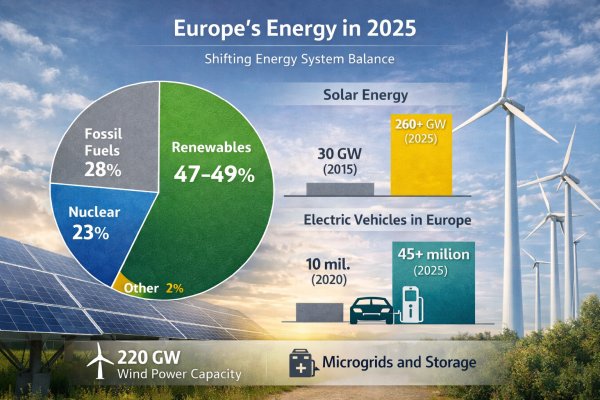
In 2025, renewable energy sources account for approximately 47–49% of electricity in the EU (Eurostat, Ember).
Structurally, this looks like:
- wind and solar combined — the largest segment of new capacity additions
- fossil fuels — less than one third of generation
- nuclear energy — stable, but without growth in share
A key turning point: in 2025, wind and solar together have for the first time consistently surpassed fossil fuel generation in Europe.
Solar energy: the fastest-growing energy resource
Solar power has become the main driver of transformation.
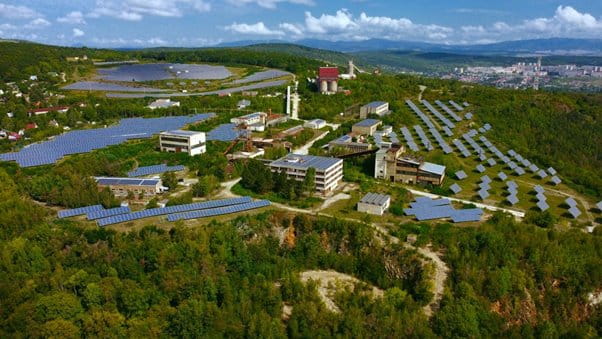
By 2025, the EU has installed over 260+ GW of solar capacity, equivalent to hundreds of millions of solar panels across the continent. Annual growth in installed capacity exceeds 50–60 GW per year.
During peak months in 2025, solar generation provided up to ~20–22% of all EU electricity.
Even more importantly, this growth is not driven only by large solar farms, but by decentralized systems — rooftop PV installations for households and businesses.
Wind energy: the infrastructure backbone of the new system
Wind power is the second key pillar of the transition.
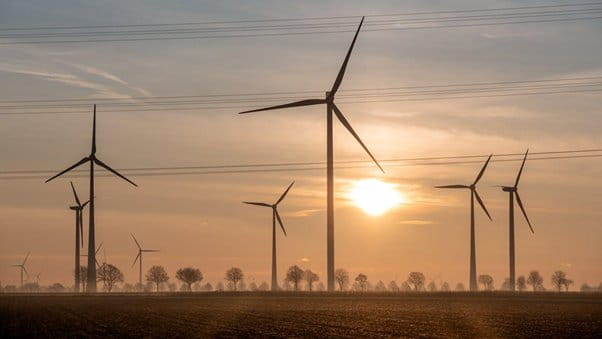
Today, Europe operates more than 220 GW of installed wind capacity, consisting of thousands of turbines both onshore and offshore. Wind energy consistently accounts for around 15–17% of total generation.
Offshore wind in the North Sea is expanding particularly fast, with large clusters of wind farms currently under development.
Electric vehicles: a new type of demand reshaping the system
The transformation is not only happening on the generation side, but also on the consumption side.
The global electric vehicle fleet has grown from ~10 million vehicles in 2020 to over 45 million in 2025. Europe is one of the key markets:
- EVs account for more than 20–25% of new car sales in many EU countries
- Norway has already exceeded 80% of new car sales being electric
This creates a new type of load on the grid — not just consumption, but a large-scale, partially controllable demand connected to the energy system.
The main challenge: the system is distributed, but not always controllable
The old energy model was built as “one center → many consumers.”
The new model looks very different:
- millions of generation sources
- millions of new consumers (EVs, heat pumps, data centers)
- highly variable generation (solar and wind)
This creates a new complexity: real-time system balancing.
And here lies the core limitation of centralized grids — they are slower than the pace of changes in both generation and consumption.
The new energy architecture
These shifts are forming a new energy system model:
- local generation (solar + wind)
- energy storage systems (batteries)
- microgrids
- digital load management
- integration of electric vehicles as “mobile batteries”
This is no longer a traditional power system.
It is a distributed digital infrastructure where energy is produced and consumed simultaneously across thousands of levels.
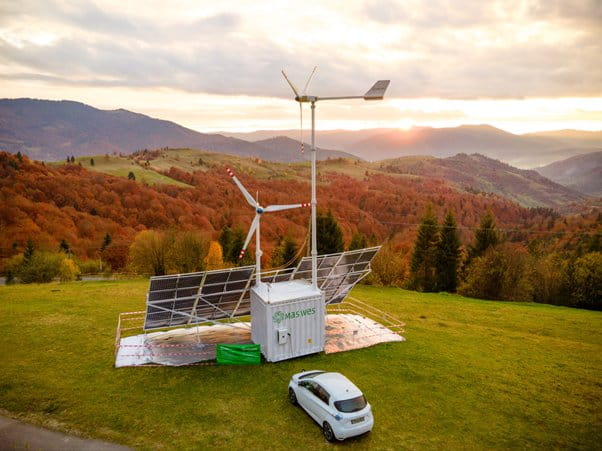
Europe has already passed the point where renewable energy can be considered merely “alternative.” It is no longer an add-on to the system — it is becoming its foundation. Nearly half of EU electricity today comes from renewable sources, and this is no longer a temporary trend, but a new structural norm embedded in the energy balance.
At the same time, hundreds of gigawatts of new solar and wind capacity have entered the grid, operating not as isolated large assets but as a distributed system of millions of generation points. In parallel, tens of millions of electric vehicles are introducing a new type of consumption — more dynamic, more flexible, and significantly less predictable for legacy infrastructure.
And at this moment, it becomes clear that the most important shift is not technological. It is architectural. Energy is no longer a centralized system with a single control point; it is evolving into a distributed network where decisions and energy flows emerge locally.
The next stage of this transformation is no longer about simply increasing the share of “green” generation. It is about building autonomous energy systems capable of operating independently or semi-independently from central grids, while remaining stable even when the global system experiences disruptions.

